Case study
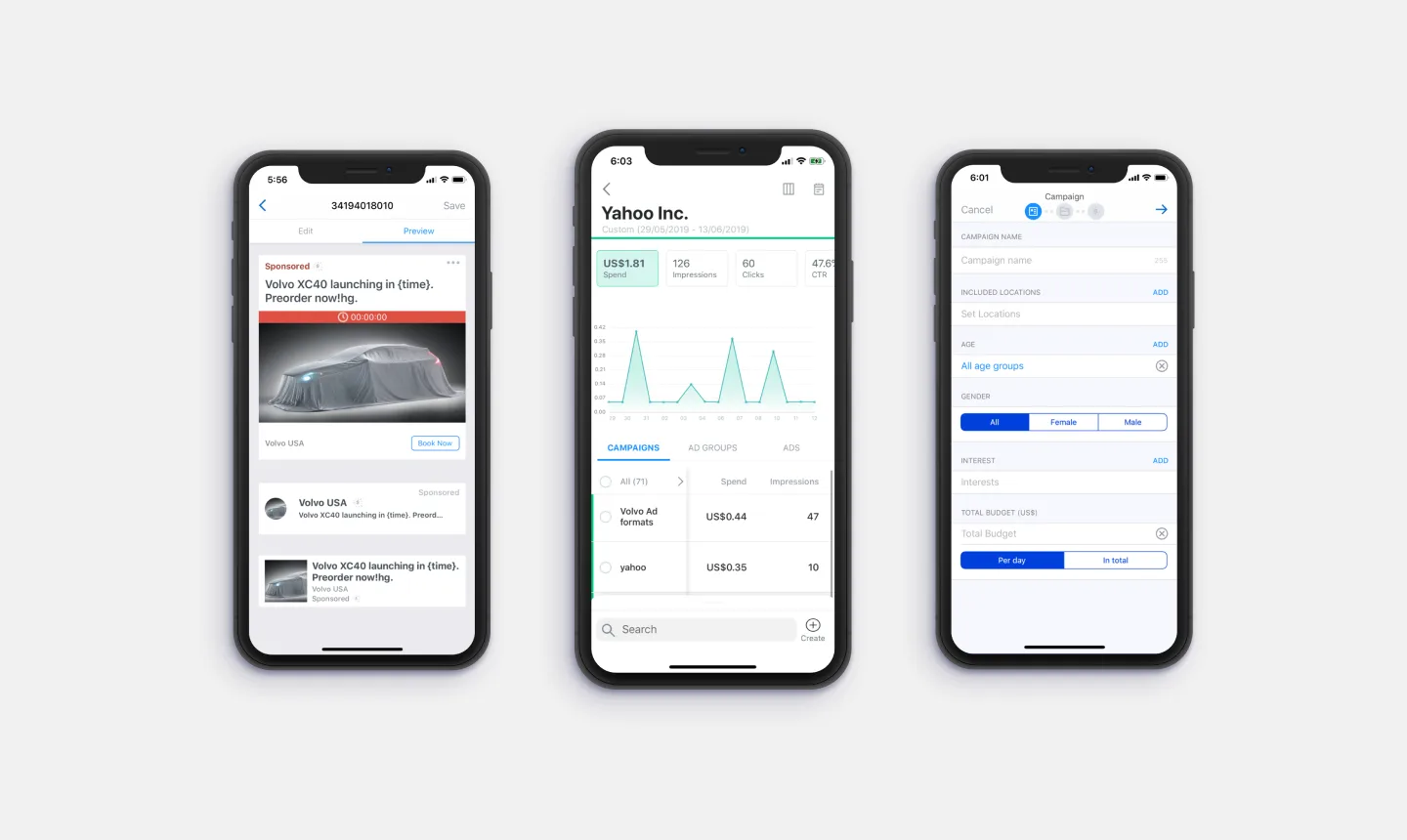
Yahoo's advertisers ran campaigns across Yahoo and AOL properties, and they wanted to manage them from anywhere. Yahoo selected CognitiveClouds to create the first version of an iOS app for those advertisers. We built it to show ad spend analytics and to let advertisers create and edit ads and pause campaigns, turning the phone into a place to act on a campaign, not just watch it.
The challenge
Advertising dashboards hold real money. An advertiser away from their desk still needs to see spend, campaign status and performance, and sometimes needs to act immediately: pause a campaign that's overspending or fix an ad. Putting those controls on a phone raises the stakes. Every action has to be deliberate, clearly confirmed and limited to what that person is allowed to change.
What we built
Spend analytics on the go
Advertisers could check ad spend from their phone. We focused the mobile views on the numbers that drive decisions, rather than squeezing every desktop report onto a small screen.
Campaign controls that respect the stakes
Creating ads, editing them and pausing campaigns are consequential actions. We made each one explicit, so an advertiser always knew what they were about to change, and tied every control to that advertiser's permissions.
Reports and actions handled differently
A spend chart can tolerate a short refresh delay. A pause request can't. Analytics updated on their own schedule, while campaign changes waited for the server to confirm them before the app reported success.
Different roles, different powers
Campaign managers, agencies and stakeholders don't all have the same rights, so the controls each person saw followed what they were permitted to change.
How the workflow fits together
How an advertiser's pause or edit travels from the iPhone to a live Yahoo or AOL campaign.
Conceptual workflow
- Advertiser
- iOS campaign app
- Advertising management API
- Yahoo / AOL campaign services
- Campaign status + analytics
What changed
Yahoo advertisers gained a first-version iOS app to check spend and manage campaigns across Yahoo and AOL properties without going back to a workstation.
What we took from it
An enterprise mobile app gets serious the moment it can change spend. The interface has to make the difference between a reported number and a confirmed action unmistakable.
How we'd build this today
How we would build this today with Cortex
Yahoo's app was built before Cortex came along. If we took on an ad-management app today, our focus would be making every money-moving action safe.
- Model permissions before screens. We would map which roles can create, edit or pause which campaigns, and generate tests for every combination before building the UI.
- Make campaign changes wait for confirmation. Pauses, edits and budget changes would only show as done after the ad server confirms them, and tests would simulate timeouts and partial failures.
- Use AI to explain, not to spend. An assistant could explain why a campaign's performance shifted, but only the advertiser can approve a change to budget or status.
- Check the money math. Spend totals would be tested across currencies, time zones and reporting delays.
What the tests would check
- A failed pause request never appears as successful
- Users can't change campaigns they aren't permitted to manage
- Spend is never mixed across currencies or time zones without conversion
- Every campaign change shows the server's confirmation
Frequently asked questions
What did CognitiveClouds build for Yahoo?
The first-version iOS app for advertisers managing campaigns across Yahoo and AOL properties, with ad spend analytics, ad creation and editing, and campaign pause controls.
What was the hardest part?
Putting financial actions on a phone safely. Every campaign change had to be deliberate, permission-aware and confirmed by the server before the app showed it as done.
Was Cortex used on the original project?
No. The Yahoo app came before Cortex; the section above describes how we would build it now.
Taking an enterprise tool mobile?
If your team needs to act on live business data away from the desk, talk to us. We'll start with the actions that cost money when they go wrong.
More: Our work · How we work · Who we are