Case study
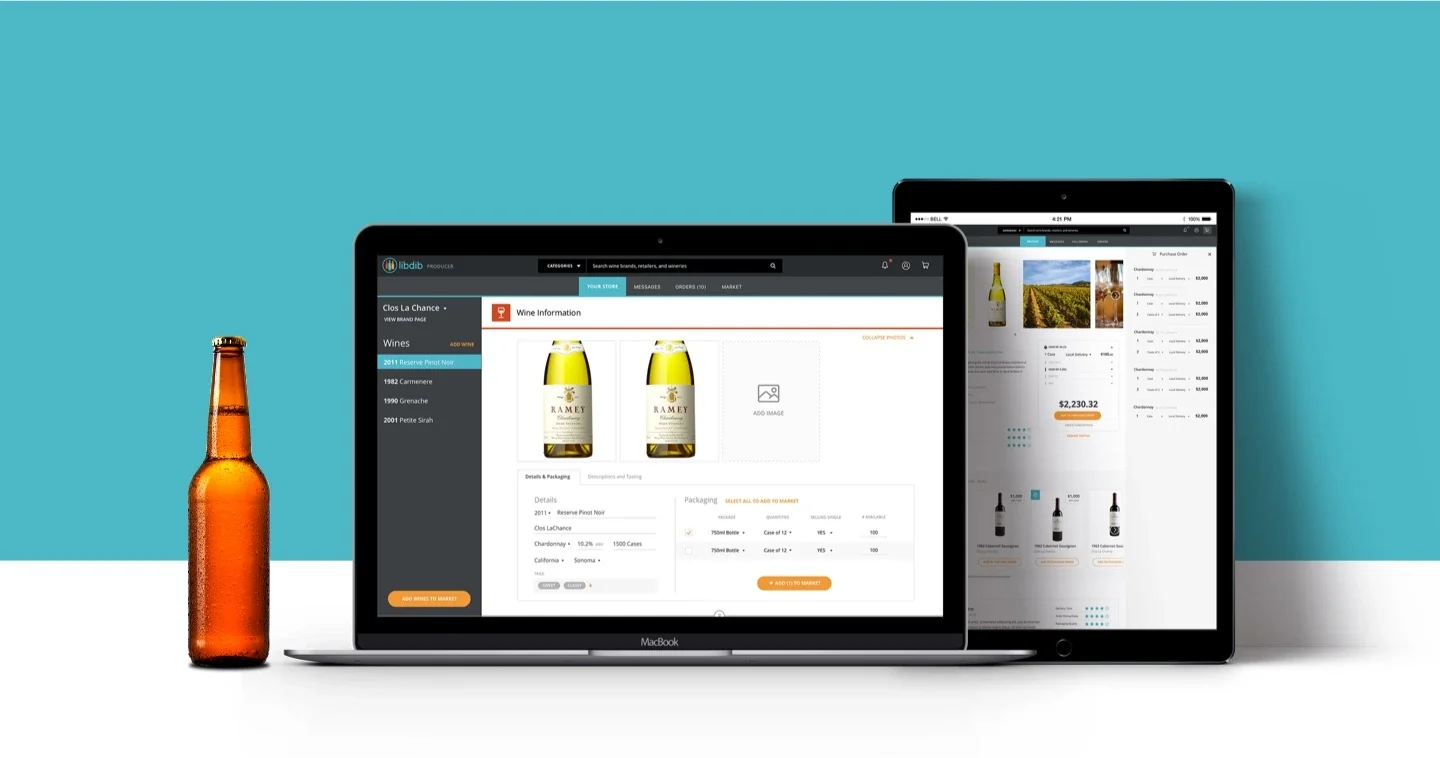
LibDib (Liberation Distribution) is a technology-enabled distributor of alcoholic beverages. Restaurants, bars and retailers use its modern web platform to buy products from makers of all sizes. We worked with LibDib on that buyer-and-maker marketplace.
The challenge
LibDib serves two sets of commercial participants: independent makers looking for distribution, and licensed buyers searching for products. Its platform brings both sides together in one place.
Alcohol is a regulated category, and that shapes everything. Makers need their catalogs shown to the right buyers. Licensed buyers need to know what they can order and on what terms. Underneath both sit user permissions, regional selling rules and order states that the marketplace has to respect every time.
How we approached it
Two audiences, one marketplace
Makers list products and manage their catalog. Restaurants, bars and retailers search, compare and order. Each side gets its own clear path through the product.
Selling rules as part of the design
Permissions and regional restrictions are not edge cases in beverage distribution. They decide who sees which catalog and who can order what, so they sit at the core of the design rather than being added later.
Orders both sides can follow
An order moves through several states between a buyer's request and distribution. Makers and buyers can both see where it stands.
Maker to licensed buyer
How a maker's listing reaches a licensed buyer and becomes an order.
Conceptual workflow
- Beverage maker
- Catalog listing
- Licensed buyer
- Order and terms
- Distribution operations
How we'd build this today
A regulated marketplace with Cortex today
This engagement predates Cortex. For a beverage marketplace today, we would use it to:
- Write the selling rules down as tests: which buyer types can see which products, in which regions, at which prices.
- Run synthetic orders that should be allowed and orders that should be blocked, on every release, so a rule change never quietly opens the wrong door.
- Help makers with catalog copy, using AI to draft product descriptions that the maker approves before publishing.
- Specify payment, tax and ERP connections up front, instead of discovering them halfway through the build.
Compliance rules are set by people who know them, and only plain business logic can approve a purchase.
Frequently asked questions
What did CognitiveClouds do for LibDib?
We worked with LibDib on its buyer-and-maker marketplace, the web platform restaurants, bars and retailers use to buy alcoholic beverages from makers of varying sizes.
What makes a regulated marketplace different?
Permissions and regional selling rules decide who can see and buy what, so they belong in the core design alongside catalog and order flows.
Was Cortex used on the original project?
No. Cortex came later than our LibDib work.
Building a two-sided marketplace?
Tell us who your buyers and sellers are and what rules sit between them.