Case study
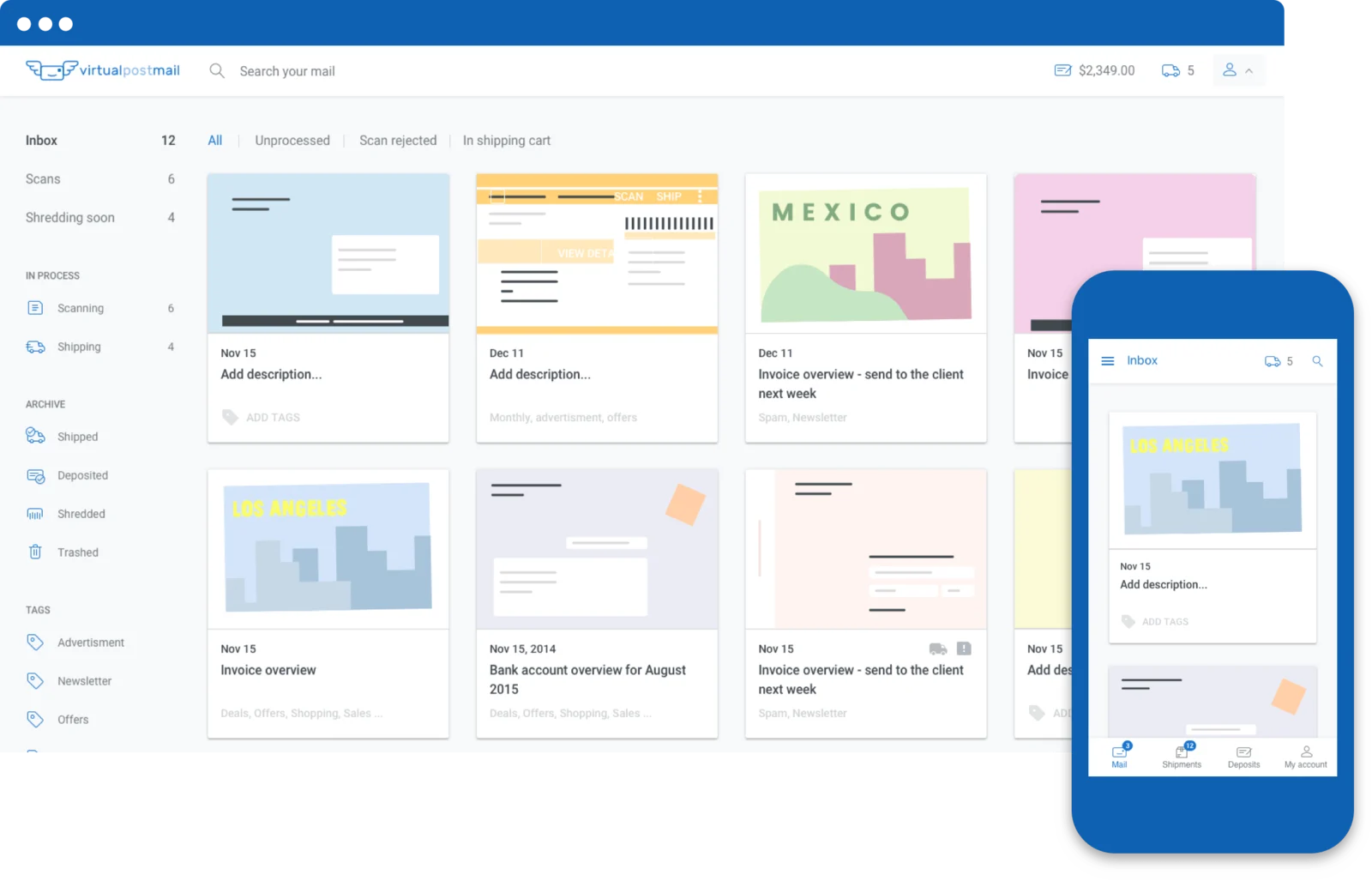
Virtual Post Mail turns physical mail into a digital service: documents and packages are processed, organized and presented to customers through a web app. We worked with Virtual Post Mail on that responsive web experience, giving people browser-based access to their digitized mail, documents and packages.
No more sifting through paper mail, with Virtual Post Mail™ all your documents and packages are processed, organized and presented via an intuitive web app. Designed for modern browsers, the app is elegant and fully responsive.
The challenge
Digital mail asks customers to trust a web app with something that used to arrive in their hands. Every letter and package starts as a physical event and becomes a digital record, and the customer has to be able to rely on that record.
That shapes the product in a few specific ways:
- Organization over volume. The point is "no more sifting through paper mail." The app has to make mail easier to find and manage than the pile on the table.
- Clear status. Customers need to know what has arrived, what has been processed and what is waiting on them.
- Privacy by design. Mail is personal. Each recipient should see their own items and nothing else, and access needs to end cleanly when it should.
- Any modern browser. The experience had to be elegant and fully responsive, working as well on a phone as on a desktop.
How we approached it
An intuitive, responsive web app
The app is designed for modern browsers and is fully responsive. Customers can reach their documents and packages from whatever device they have, and the layout adapts without losing clarity.
Organized around the customer's mail
Documents and packages are presented organized, not as a raw feed. The product's value is in turning a stream of physical items into something a customer can scan, search and act on.
Trust across the handoff
The moment mail moves from the physical world to the digital one is where trust is won or lost. A good digital mail product makes each item's status and history visible, and keeps permission boundaries strict from the moment an item is processed.
How we'd build this today
How we'd build it today
Our Virtual Post Mail work came before Cortex. For a digital mail product today, we would:
- Give every item a clear life story. Each letter or package moves through defined states, from received to processed to viewed, and every step is logged and cannot be edited after the fact.
- Test sorting with made-up mail. Document categorization is checked against synthetic examples, and customers can correct a wrong category with one click.
- Prove recipients stay separate. Automated tests confirm that one customer can never see another's mail, that revoked access ends immediately and that retention rules delete items on schedule.
- Keep AI summaries inside the customer's own mailbox. If the app summarizes a letter, it only reads what that customer is allowed to see, and shows which document the summary came from.
Security reviewers check every change that touches mail contents before it goes live.
Frequently asked questions
What did we work on with Virtual Post Mail?
A responsive web app where customers' documents and packages are processed, organized and presented, designed for modern browsers.
What matters most in a digital mail product?
Trust: clear status for every item, strict privacy between recipients, and an experience that is easier than sorting paper.
Was Cortex used on this project?
No. Virtual Post Mail predates Cortex.
Work with us
Turning a physical process into a digital service? We start with the handoff: what customers see, who can see it, and how every item stays traceable.