Case study
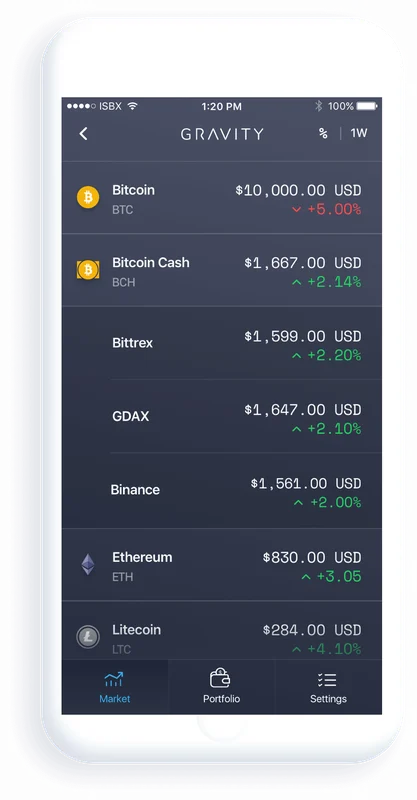
Gravity is a cryptocurrency pricing platform built for people who trade across several exchanges. It connects to exchange APIs to provide realtime pricing, imports each user's transaction data, and turns that history into tax-smart accounting. We worked with Gravity on this platform, where every number on screen has to hold up at tax time.
A comprehensive cryptocurrency pricing platform that integrates with cryptocurrency exchange API’s to provide realtime pricing, transaction data import, and perform tax-smart accounting.
The challenge
Crypto traders rarely keep their activity in one place. Trades happen on different exchanges, each with its own API, data format and habits. To give an accurate tax picture, Gravity has to pull all of that together into one clean ledger.
That is harder than it sounds. Exchange data arrives with duplicated trades, missing fills, schemas that change without warning and timestamps that don't agree. Any one of those can throw off a cost basis, and a wrong cost basis means a wrong tax figure.
What the platform does
- Realtime pricing drawn from exchange APIs.
- Transaction import that brings a user's trade history in from the exchanges they use.
- Tax-smart accounting that turns imported trades into a tax-ready picture.
Where crypto tax software earns trust
One trade, counted once
The same trade can show up twice across imports, or arrive in pieces. Import logic has to recognize duplicates and partial fills so the ledger reflects what actually happened.
Exchanges change their data
Exchange APIs evolve, and a field that meant one thing last month can mean another today. Imports need to notice when a format shifts instead of quietly reading it wrong.
Time matters for tax
Cost basis depends on the order of trades. Timestamps from different exchanges have to be lined up on one clock before any calculation runs.
Every figure traces back to a trade
When a user questions a number, the platform should be able to show exactly which trades produced it.
How we'd build this today
How we'd approach it today with Cortex
Our Gravity work predates Cortex. Building a crypto pricing and tax platform today, we'd start with the data.
- Record real exchange payloads. Capture sample responses from each exchange and replay them in tests, so a format change breaks a test before it breaks a user's ledger.
- Version the tax rules. Write cost-basis rules as versioned specifications, reviewed by tax specialists and backed by regression tests that fail if a calculation changes unexpectedly.
- Keep calculations rule-based. Use AI only to help sort unusual transactions into categories for a person to confirm. The tax math itself never depends on a model.
- Reconcile against known answers. Run every release against synthetic trade ledgers with known correct results.
Our engineers decide what ships. Cortex Pods speed up writing adapters and tests, and a domain expert signs off on any change to how tax figures are calculated.
Frequently asked questions
What is Gravity?
A cryptocurrency pricing platform that integrates with exchange APIs for realtime pricing and transaction import, and performs tax-smart accounting.
What makes crypto tax data hard?
Trades are spread across exchanges with different formats, and duplicates, missing fills and mismatched timestamps all affect cost basis.
Was Cortex used on the original project?
No. Cortex came later; the plan above shows how we'd approach a similar platform today.
Building financial data software?
Tell us where your data comes from and which numbers your users rely on most. We'll show you how we'd make them dependable.