Case study
Walmart's merchandising team keeps the online catalog accurate, and much of that work still needs human judgment. We designed and built a focused single-page editor for the team's most complex product edits. After launch, average manual editing time dropped from 36 minutes to 17 minutes per product, a reduction of more than 52%, for a 300+ person merchandising team.
The challenge
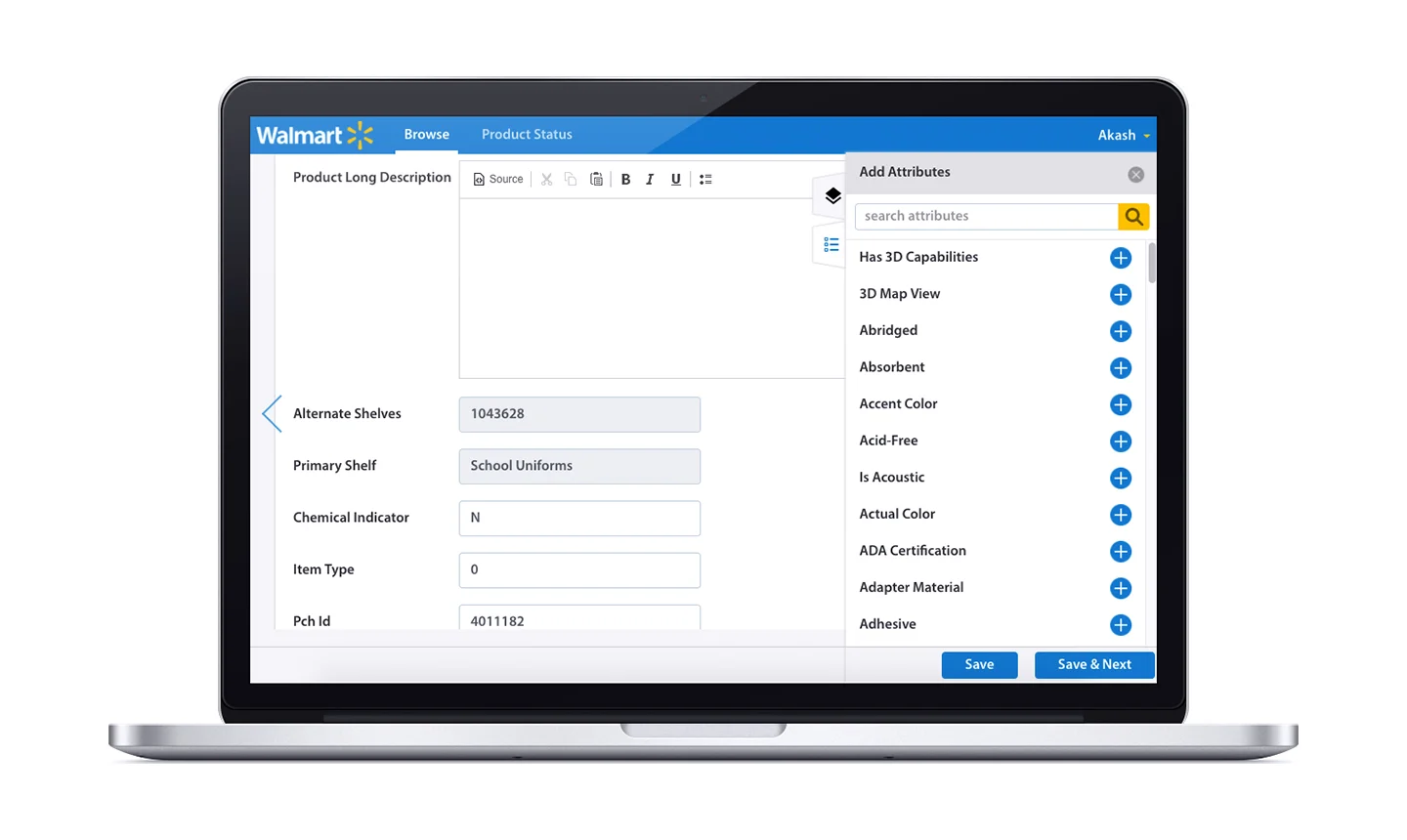
Walmart could automate much of its catalog intake, but the difficult tail of product merchandising still landed on people. Editors switched between several browser tabs, juggled product variants and worked through inconsistent information. The schema behind each product contained more than 10,000 attributes, and every edit touched legacy systems as well as modern ones.
Fewer clicks was never the goal on its own. A faster editor had to keep the catalog correct.
What we built
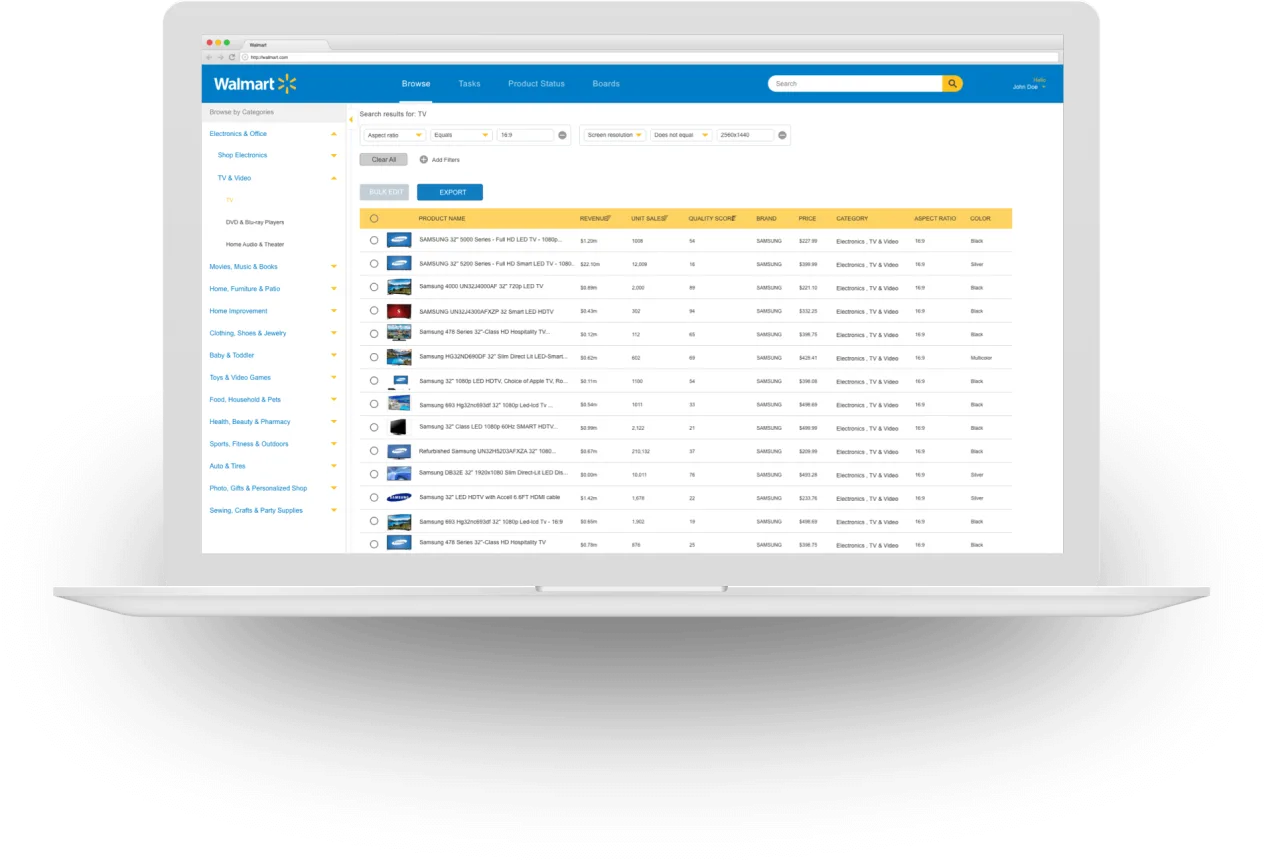
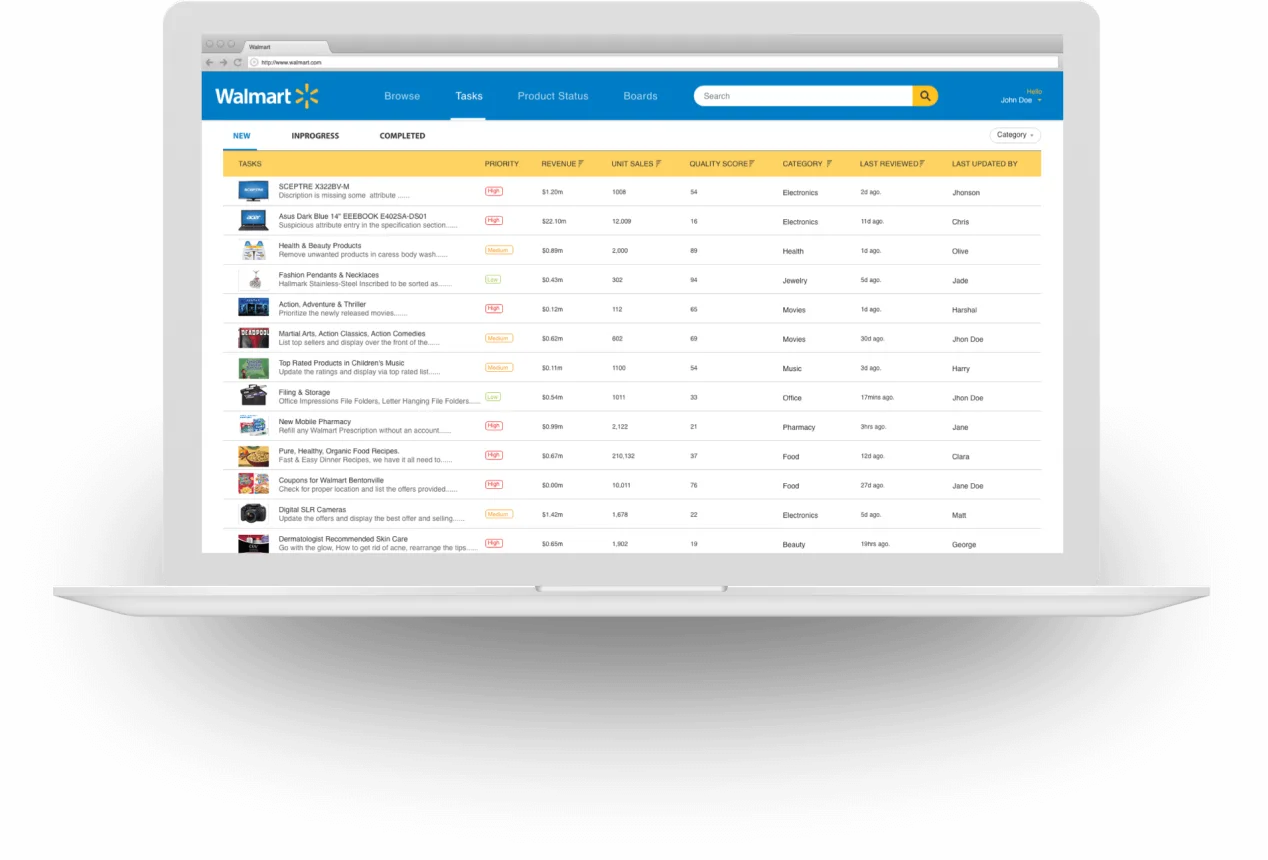
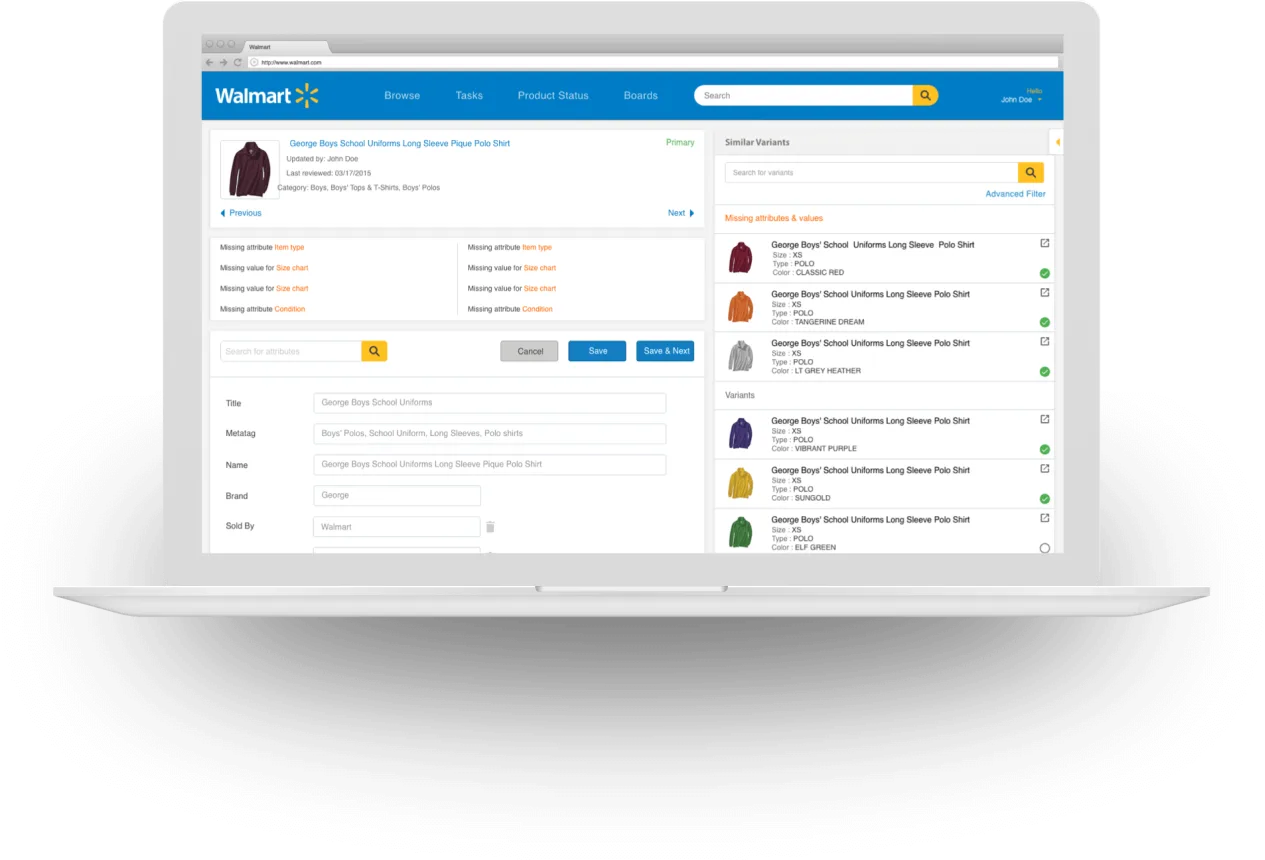
Over approximately six months, we built a single-page merchandising workspace and the cross-system integrations behind it. Before writing code, we mapped how editors actually worked, then produced high-fidelity flows, integrated with legacy and modern APIs, handled complex variant grouping and added cross-catalog product comparison.
A workflow built around the merchandiser
We brought editing, grouping and review into one working surface where an editor could keep context from start to finish. We judged progress by completed edits, not by screens shipped.
Working with inconsistent enterprise APIs
Some endpoints had missing or inaccurate specs. One workflow needed a burst of roughly 10–200 API calls because a batch API wasn't available. Our engineers worked with Walmart's internal API owners and optimized the frontend around that constraint, so editors got a responsive tool without waiting on new backend services.
Comparing products across catalogs
Editors needed to check Walmart listings against Amazon. We built UPC-to-ASIN conversion, a browser-based reference view, and mapping between Amazon's product fields and Walmart's model. Part of the job was deciding which external fields could be mapped with confidence and which should stay out of the comparison.
Performance where the team actually works
Load tests showed network and hardware constraints facing the India-based merchandising team. We recommended CDN-based performance improvements to close that gap. A fast desktop in a lab is not where editors spend their day, so we tuned for their setup.
How the workflow fits together
How a Walmart editor's change moves from the workspace to the catalog.
Conceptual workflow
- Merchandising editor
- Single-page product editor
- Enterprise API integration
- Catalog validation
- Product attribute services
What changed
Editors moved from a tangle of tabs to one workspace built around their task. An average product edit now took 17 minutes instead of 36.
What we took from it
Measure the whole task, not the new screen. In enterprise workflow modernization, the real costs usually hide in cross-system data mapping and APIs that don't behave as described. Understanding that work first is what made the time savings possible.
How we'd build this today
How we would build this today with Cortex
This editor was delivered before we built Cortex. Taking on the same brief today, we would put the catalog data at the center from day one.
- Map every field before touching the UI. Each edit action, product field, transformation and approval would be written down as a rule the system can test.
- Let AI draft the mapping work. Cortex can propose Amazon-to-Walmart field mappings, draft API adapters and flag mismatches; a merchandising lead and our engineers approve every mapping before it goes live.
- Test against the real API behavior. We would record how the legacy endpoints actually respond, including the slow and inconsistent ones, and build contract tests around them.
- Keep timing as a release target. Complex edit flows would be timed in testing, so a change that slows editors down doesn't ship.
What the tests would check
- No product field is lost when converting between schemas
- Variant groups stay intact after a partial API failure
- Saving twice never creates conflicting edits
- Every mapping and manual override leaves an audit record
Frequently asked questions
What did CognitiveClouds build for Walmart?
A single-page merchandising workspace with variant grouping, cross-catalog comparison and integrations with Walmart's legacy and modern APIs.
How long did the project take?
Approximately six months.
Was Cortex used on the original project?
No. Cortex didn't exist yet when we built the Walmart editor; the section above shows our approach today.
Modernizing an internal tool?
If your team loses hours to complex data, legacy systems and slow internal software, we'd like to see the workflow. We'll start by timing the real task and finding where the minutes go.
Related: Enterprise work · Our delivery approach · Company