Case study
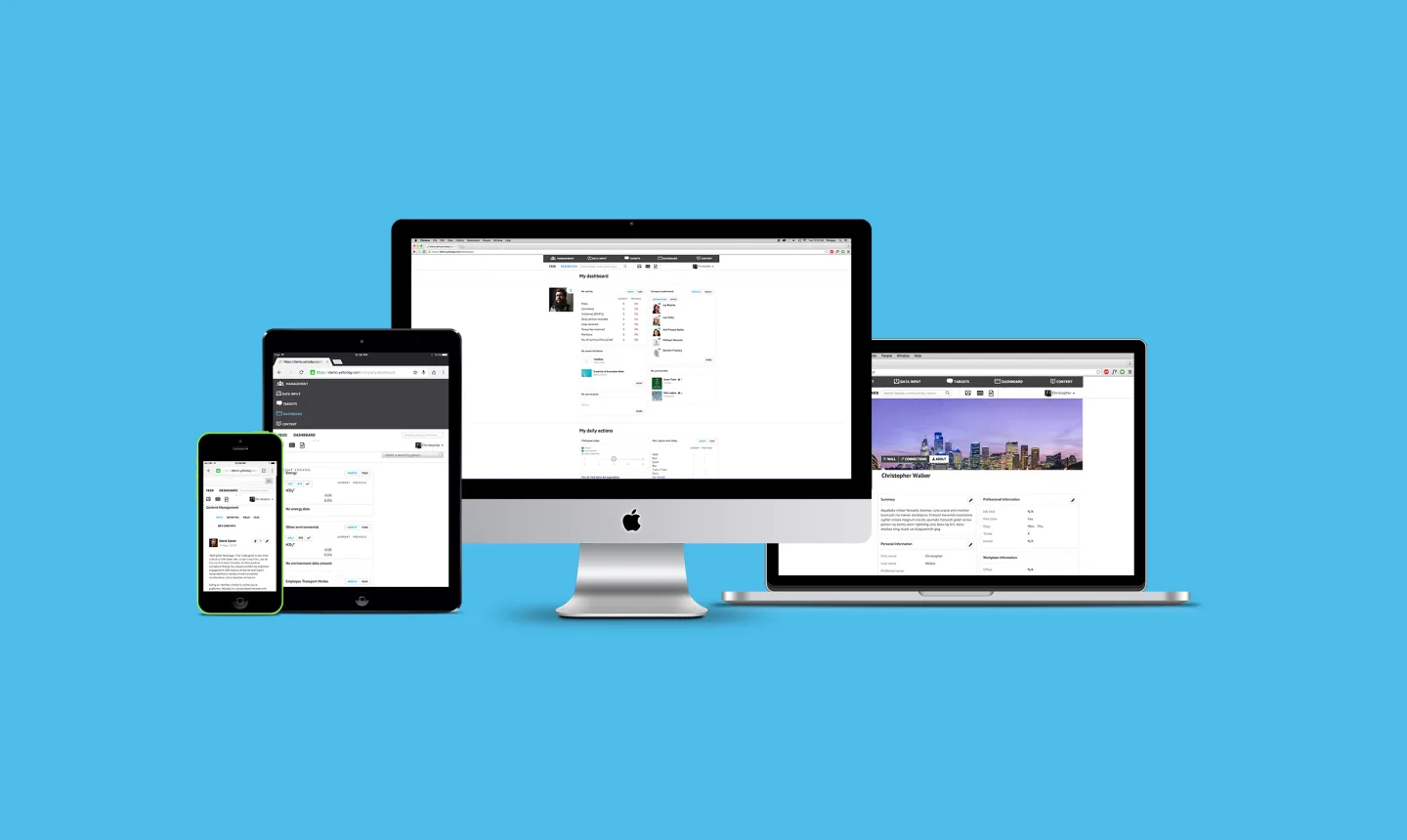
Yelloday helps organizations coordinate their sustainability work as a team. The company had potential enterprise buyers and needed a first version of its product to put in front of them. We designed and developed the end-to-end SaaS web application: a multi-tenant, role-based enterprise social network for sustainability.
The challenge
Enterprise buyers don't just want a feed and a task list. They want to know their people, content and data stay inside their own company, and that the right people control what. Yelloday needed a real multi-tenant product where many organizations could run sustainability initiatives side by side without one company's members, posts or reports ever mixing with another's.
What we built
A social workspace for sustainability teams
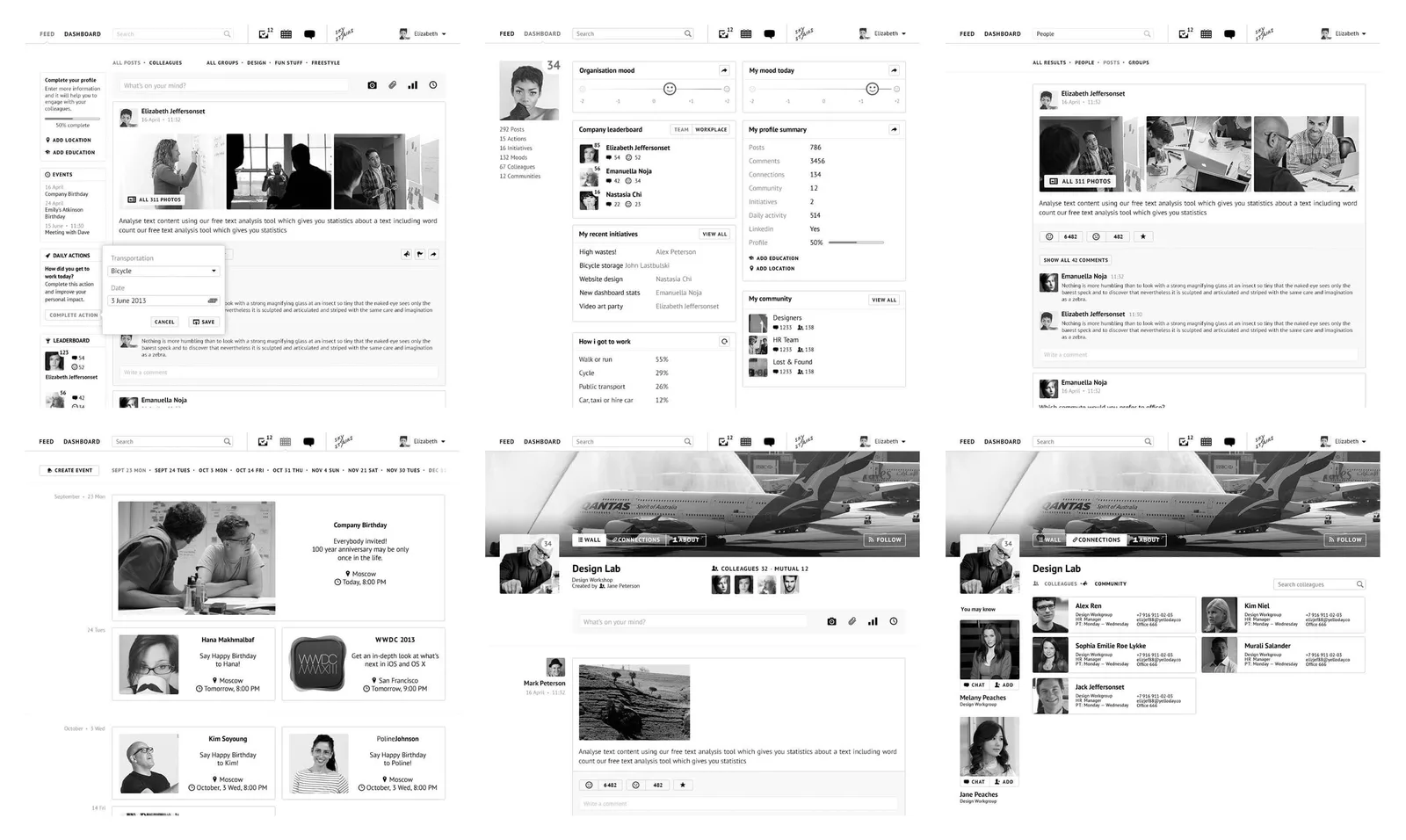
Employees could share updates in a news feed, plan around a shared calendar, track work in a task list and find colleagues in a company directory. Reporting gave leaders a view of what their teams were doing.
Multi-tenancy from the ground up
Each organization was its own tenant. We built tenant isolation into the application so feeds, tasks, calendars, directories and reports stayed within the company they belonged to.
Roles that match how companies are organized
The application had three roles: company administrator, group administrator and employee. The central design question was always who can see and change what, at which level of the organization, and we answered it the same way across every feature.
How the system fits together
How a Yelloday post or report stays within one company's tenant and roles.
Conceptual workflow
- Tenant organization
- Role and group access
- Social feed and tasks
- Calendar and directory
- Sustainability reporting
What changed
Yelloday went from enterprise interest to a working multi-tenant product, and closed large deals on delivery of the first version. Its founder spoke about working with us.
How we'd build this today
How we would build this today with Cortex
Yelloday's first version came before Cortex. If we built a multi-tenant collaboration app today, we would start with the permission model and treat it as the product's backbone.
- Draw the permission map first. Every action a company admin, group admin or employee can take would be listed, and each one would get an automated test.
- Test for leaks between companies. We would seed several fake organizations and run checks that try to read or change another tenant's feed, tasks, calendar and reports.
- Let AI write the repetitive tests. Cortex can generate the large role-by-feature test matrix as each feature is built; our engineers review the rules and approve any new admin powers.
- Roll out one company at a time. New features would reach tenants gradually, with monitoring watching for permission errors.
What the tests would check
- One company can never read or write another company's data
- No admin gains new powers without explicit approval
- Report exports respect the same access rules as the screens
Frequently asked questions
What did CognitiveClouds build for Yelloday?
The end-to-end SaaS web application: news feed, calendar, task list, company directory and reporting, on a multi-tenant model with company administrator, group administrator and employee roles.
Why did multi-tenancy matter for Yelloday?
Its buyers were enterprises. Each needed confidence that its people and data stayed separate from every other organization on the platform.
Was Cortex used on the original project?
No. Yelloday was delivered before Cortex existed; the section above covers how we would build it today.
Building for enterprise buyers?
If your first enterprise deal depends on getting roles and data separation right, we'd like to help you get there.
Related: SaaS work · Services · Delivery with Cortex