Case study
Klinify is a tablet-first electronic medical record and practice-management product for doctors. It lets physicians write notes by hand on iPad Pro or Android tablets, search prescriptions, and place lab orders and review results. We built the Klinify Android EMR app, with digital stylus support at its core.
The challenge
Doctors don't want software to break the rhythm of a consultation. Many still think best with a pen in hand, and typing into a form while talking to a patient pulls attention away from the person in front of them.
Klinify's answer was a stylus-first EMR. That raises its own engineering questions: handwriting has to feel natural, notes have to save reliably, and clinical actions like prescriptions and lab orders have to stay precise and safe while the physician stays in control.
What we built
We built the Android EMR app with digital stylus input, sitting inside Klinify's broader practice-management product.
Handwriting that feels like paper
Palm rejection, note state, clear saving indicators and quick switching between the patient's details and the note all decide whether a doctor trusts the tool mid-consultation.
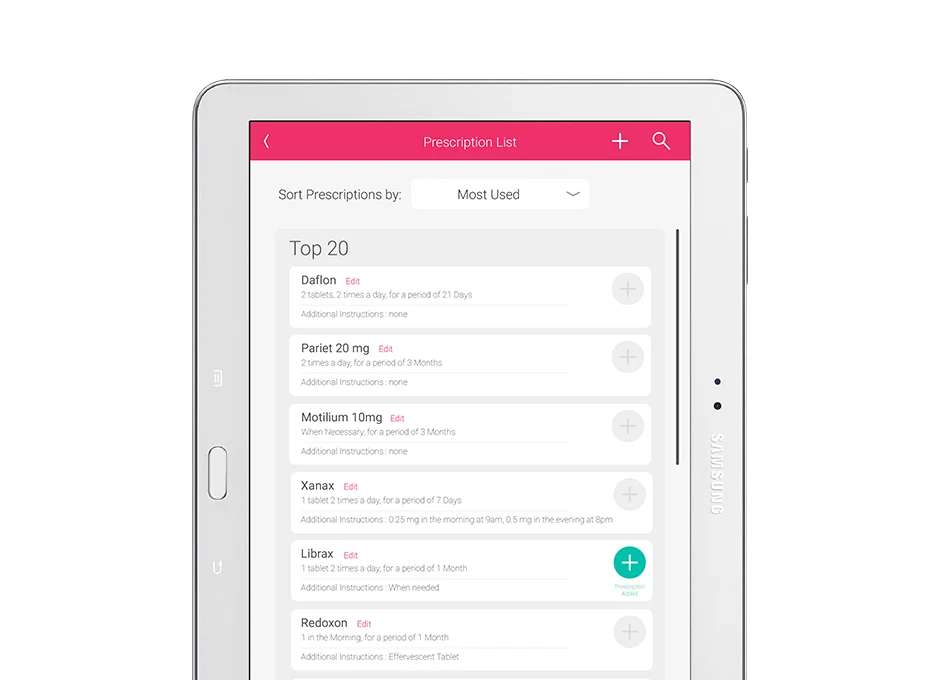
Careful prescription search
In a medication workflow, a search match must never be mistaken for a prescription. Selection and entry are deliberate steps, so the doctor always confirms what is being prescribed.
Lab orders linked to results
Doctors place lab orders and review results in the same app. Each result stays tied to the right patient and the consultation where it was ordered.
Every change traceable
Access to records, edits and exports are tied to the person who made them, so the practice always knows who changed what.
From handwritten note to clinical record
How a doctor's stylus notes, prescriptions and lab orders flow into the patient's record.
Conceptual workflow
- Clinician on Android tablet
- Stylus-enabled patient record
- Prescription or lab workflow surface
- Clinical record and practice context
What changed
After we delivered the first version, Klinify went on to win clinic deals.
How we'd build this today
A stylus-first EMR with Cortex today
Klinify's app came before Cortex. Rebuilding a clinical tablet app today, we would use it to:
- Map the consultation with clinicians first, step by step, and turn that map into test scenarios before writing code.
- Stress-test handwriting sessions, including app switches and low battery, to make sure no saved note is ever lost.
- Generate realistic patient test data for note entry, prescriptions and lab screens, so regression tests cover real clinical paths without using real patients.
- Keep AI out of prescribing decisions. It can help draft, but nothing is submitted without the doctor's explicit confirmation.
Clinical validation, privacy review and release approval stay with named people on both sides.
Frequently asked questions
What did CognitiveClouds build for Klinify?
The Klinify Android EMR app with digital stylus support, part of a broader practice-management product covering handwritten notes, prescription search, and lab orders and results.
What happened after the first version?
Klinify went on to win clinic deals.
Was Cortex used on the original project?
No. We built Klinify's app before Cortex existed.
Building tools for clinicians?
If doctors will use your product mid-consultation, we'd like to talk about the workflow and the safety rules it has to follow.