Case study
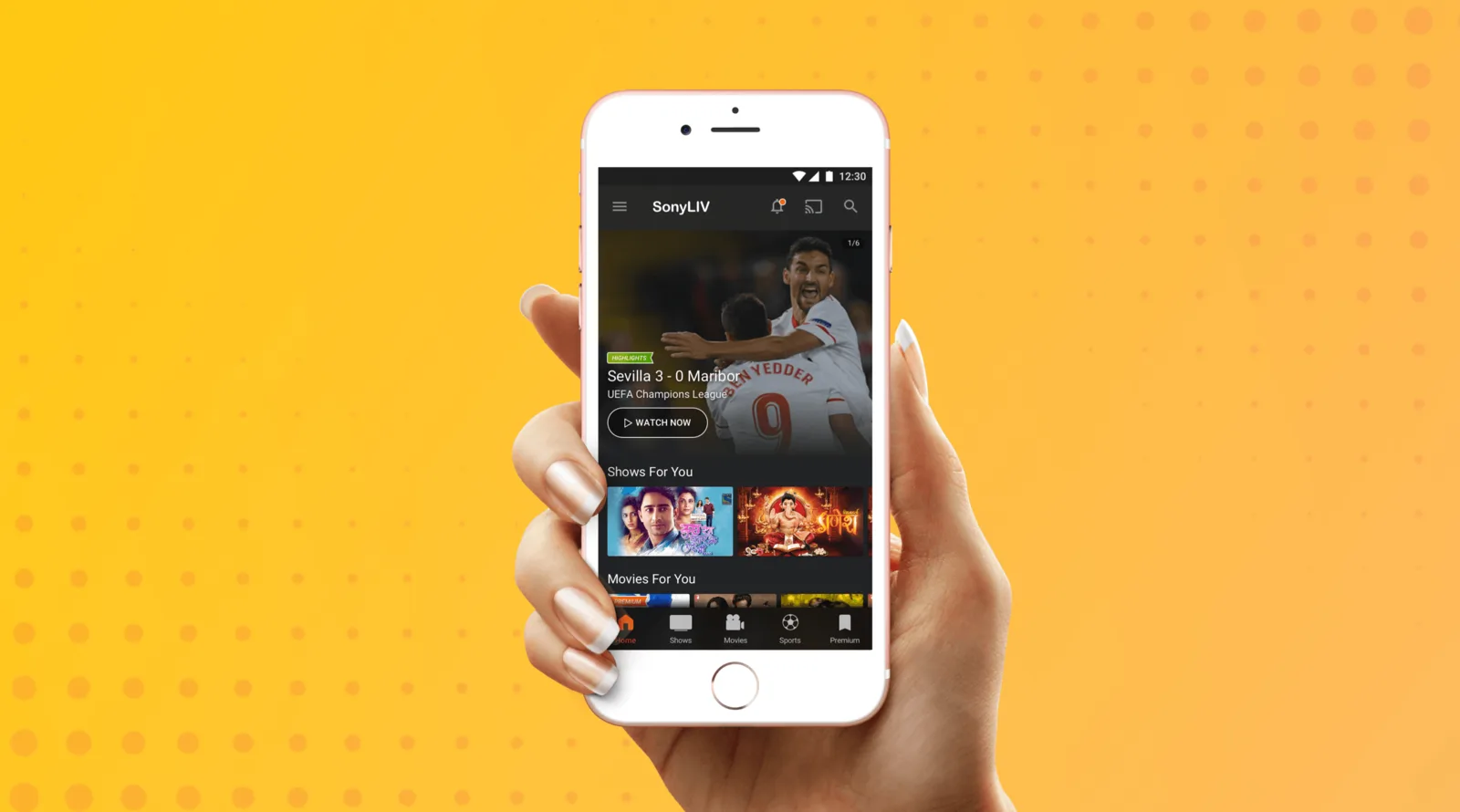
SonyLIV is Sony's streaming service. Its website ran on an aging AngularJS 1.x frontend that was getting harder to evolve. We rebuilt it as an Angular 5 progressive web app, working through uncertain API behavior, modernizing navigation and performance, and prototyping offline viewing. After launch, initial load came in at roughly two seconds and monthly active users grew threefold.
The challenge
Moving off AngularJS was a chance to simplify the product and add progressive-web capabilities. It also meant changing the foundation of a live streaming product without breaking what viewers relied on.
Three things made it hard:
- A migration, not a reskin. Replacing the frontend changed component structure, routing and state. Streaming is unforgiving: slow loads, broken browsing transitions or a lost place in a show are noticed immediately.
- Incomplete API specs. SonyLIV exposed both legacy and newer APIs, and the written specs did not fully match how they behaved.
- Late design changes. The design kept evolving close to release, and the date did not move.
What we built
An Angular 5 progressive web app
We developed a new Angular 5 PWA with a redesigned frontend, lazy loading and a modern navigation model, replacing the AngularJS site.
Offline viewing, proven first
Before committing to the full rewrite, we prototyped offline-supported video viewing. Proving the progressive-web offline behavior early gave the team a clear, tested decision point before building out the rest.
Integrating against real API behavior
Because the API specs were incomplete, our engineers replayed existing user flows against the old and new APIs and modeled the behavior they observed. The new application was built against how the services actually worked, not against an inaccurate endpoint description.
Performance and change control
We tracked Lighthouse quality signals throughout, optimized bundle loading, and absorbed late design changes without missing the agreed release.
How the workflow fits together
How a viewer's request moves through the new PWA to SonyLIV's playback and catalog services.
Conceptual workflow
- Streaming viewer
- Angular 5 PWA
- Playback + catalog APIs
- Streaming service backend
- Content delivery
What changed
- ~2 seconds initial page load.
- 3x monthly active users after the PWA launch.
The lesson from SonyLIV: modernization works when you keep the user's journey intact while replacing everything beneath it. Prototypes, API behavior reconstruction, bundle budgets and disciplined handling of late UX changes belong in the plan from day one.
How we'd build this today
How we'd build it today
We rebuilt SonyLIV before Cortex existed. Running the same migration now, we would:
- Map the old site before replacing it. Cortex would build a route-by-route map from the AngularJS site and its API behavior to the new app, so nothing a viewer relies on gets lost.
- Let agents draft components and API mocks. In isolated sandboxes, agents can produce first versions of components and mock APIs for engineers to refine.
- Guard playback above all. Automated tests would confirm that viewers keep access to what they are entitled to watch, can resume where they left off and see clear errors, across every migrated route.
- Watch speed on real devices. Performance budgets are checked on representative phones and laptops, not just a fast developer machine.
- Absorb late design changes safely. Navigation and playback tests run on every design change, so a new layout cannot quietly break watching.
Frequently asked questions
What did CognitiveClouds build for SonyLIV?
An Angular 5 progressive web app that replaced the AngularJS 1.x site, with a redesigned frontend, an offline viewing prototype, integration against old and new APIs, and Lighthouse-driven performance work.
What results did the new PWA deliver?
Initial page load of about two seconds and three times the monthly active users after launch.
Was Cortex used on the original project?
No. The SonyLIV rebuild came before Cortex.
Work with us
Modernizing a high-traffic web product without losing your audience? We'd like to hear about it.
See also: Delivery approach · Customer work