Case study
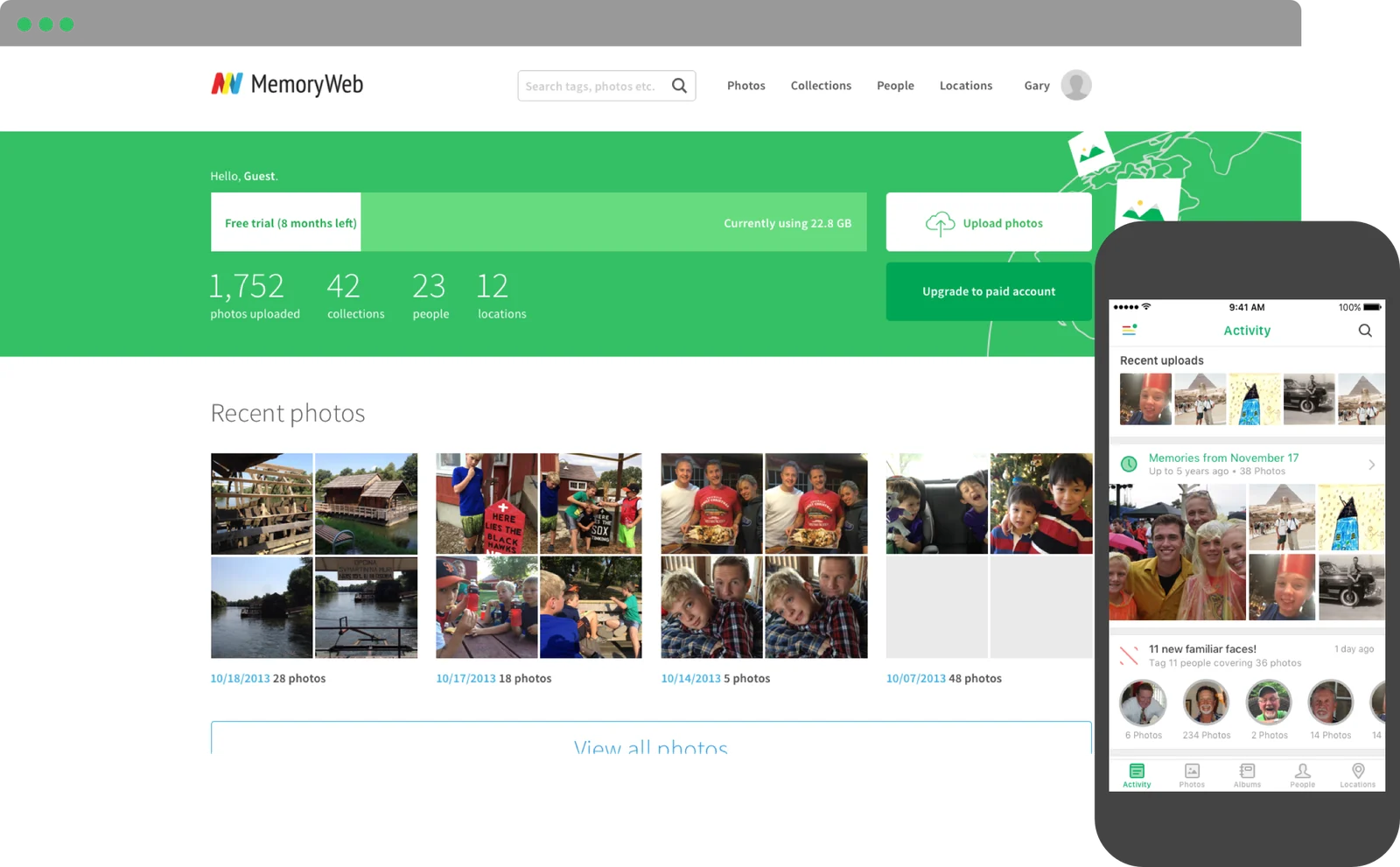
MemoryWeb helps people do more with their photos: view them, create with them, share them and collaborate on them. We worked with MemoryWeb on a product built for the reality of living with massive photo archives.
The challenge
Most people now carry thousands of photos and rarely look at them. Photo apps are good at storing images and poor at helping anyone relive the moments behind them.
Photos also don't behave like ordinary files. A single picture can belong to an event, a set of people, a place and a memory all at once. Organizing a collection means keeping all of those connections without losing track of the original image.
In MemoryWeb's words
Living in the digital age means dealing with massive photo archives. While most photo apps fall short in helping relive your memories, MemoryWeb does more for your photos. It allows you to view, create, share and collaborate like never before.
The engineering behind MemoryWeb's idea
Originals stay untouched
Albums, people, places and stories are layered on top of the photo, never written into it. Keeping the original separate from everything people add makes search, sharing and collaboration more flexible.
Sharing without surprises
Collaboration means other people can see and add to a collection. Private and shared albums need clear permissions, so nobody sees a photo they shouldn't.
Ready for the messy moments
Big libraries bring duplicates, deleted albums and, one day, the wish to move everything elsewhere. Planning for those moments early keeps original files safe and makes sure nothing is lost when a collection changes.
How we'd build this today
A photo platform with Cortex today
MemoryWeb came before Cortex. For a shared photo product today, we would use it to:
- Build synthetic photo libraries with tens of thousands of images, duplicates and odd metadata, and test import and export against them on every release.
- Generate permission tests for every combination of private album, shared album and invited collaborator.
- Offer duplicate cleanup as a suggestion, with a review screen and an undo, never an automatic merge.
- Check that dates, people and places survive any move to a new storage system.
Any AI tagging would be opt-in, easy to explain and easy for people to correct.
Frequently asked questions
What is MemoryWeb?
An app for viewing, creating, sharing and collaborating around large photo collections.
What makes photo platforms hard to build well?
Keeping original images intact while supporting the many ways people organize, share and revisit them, including duplicates, permissions and exports.
Was Cortex used on the original project?
No. We worked with MemoryWeb before Cortex existed.
Building around personal media?
If your product holds people's photos, videos or memories, we'd like to hear what you want them to be able to do.