Case study
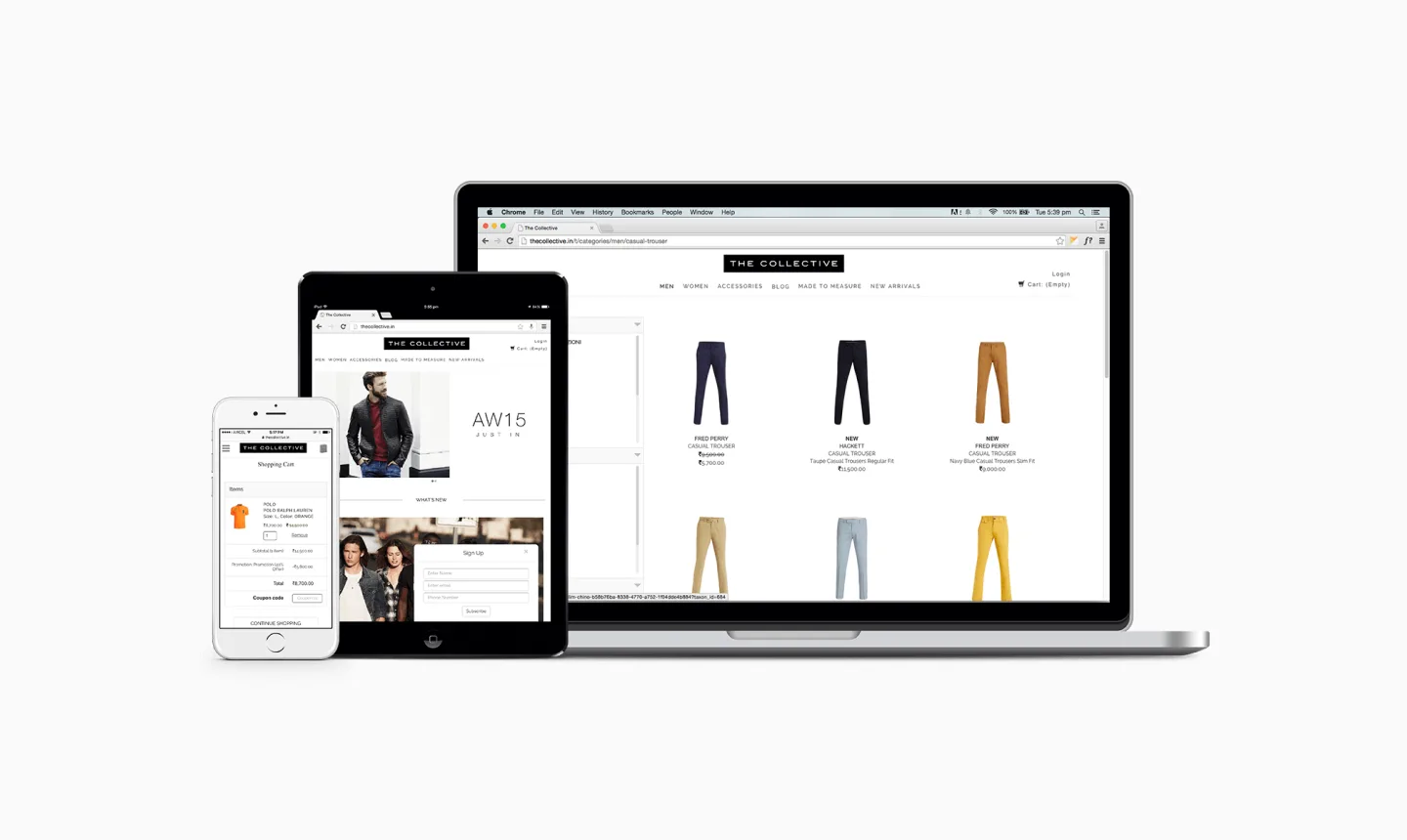
The Collective needed its first responsive ecommerce application, and it needed more than a storefront. We helped The Collective design and develop that first version, covering the shopper-facing store along with the fulfillment, merchandising and back-office functions that keep it running.
The challenge
A commerce business fails quietly when it can sell a product but cannot merchandise and fulfill it consistently. Launching a responsive consumer store meant designing for two audiences from the start:
- Shoppers, browsing and buying on a phone or a desktop, who expect the cart and product pages to behave the same on both.
- Staff, managing products, orders and fulfillment, who need clear controls to keep the store accurate.
The Collective was launching a first version, so the work had to establish both sides together rather than bolting operations on later.
What we built
A responsive storefront
We designed and developed the store to be responsive from the first version. A cart and a product page should behave coherently whether the shopper is on a phone or a laptop, with the same items, prices and totals.
Merchandising that keeps listings right
Product listings depend on stock, pricing, media and catalog structure. We built merchandising workflows so the team could control what appears in the store and how, keeping the storefront and the operations behind it in agreement.
Fulfillment as part of the flow
Order capture, staff visibility and fulfillment status belong to one continuous business process. We built fulfillment into the application so an order moves from checkout to the team that ships it without gaps.
A back office the team can run
An operations team needs understandable product and order controls. We built the back-office functions alongside the storefront, because those internal workflows decide whether a store can grow.
From storefront to back office
A simplified view of the path from storefront to order records.
Conceptual workflow
- Customer browses responsive storefront
- Cart / purchase flow
- Merchandising and fulfillment back office
- Order and inventory records
Why it matters
The Collective launched its first responsive ecommerce application with storefront, merchandising, fulfillment and back office designed as one system. Getting that foundation right in version one is what lets a store scale without rebuilding its operations later.
How we'd build this today
How we'd build it today
We built The Collective's first store before Cortex existed. Starting the same store now, we would:
- Write the selling rules down as tests. Which products are visible, which can be bought and at what price would be tested before the catalog goes live.
- Check that phone and desktop agree. The same cart must produce the same total on every screen size, and a test would fail the build if it does not.
- Trace every order step. From payment to packing to dispatch, each change in an order's status is recorded, so the team can answer "where is my order?" quickly.
- Decide what happens to sold-out items. An out-of-stock SKU is never quietly accepted; the store follows a policy the merchandising team has chosen.
- Use AI for content, with a merchandiser in charge. Agents can draft product descriptions and catalog updates, but nothing publishes without merchandising approval.
Frequently asked questions
What did CognitiveClouds build for The Collective?
We helped The Collective design and develop its first responsive ecommerce application, with fulfillment, merchandising and back-office capabilities.
Why build operations tools in the first version?
Because a store that cannot merchandise and fulfill consistently fails, however good the storefront looks. Building both together avoids a costly rebuild later.
Was Cortex used on the original project?
No. The Collective's store came before Cortex.
Work with us
Planning ecommerce that has to work behind the storefront as well as in front of it? Let's talk.