Case study
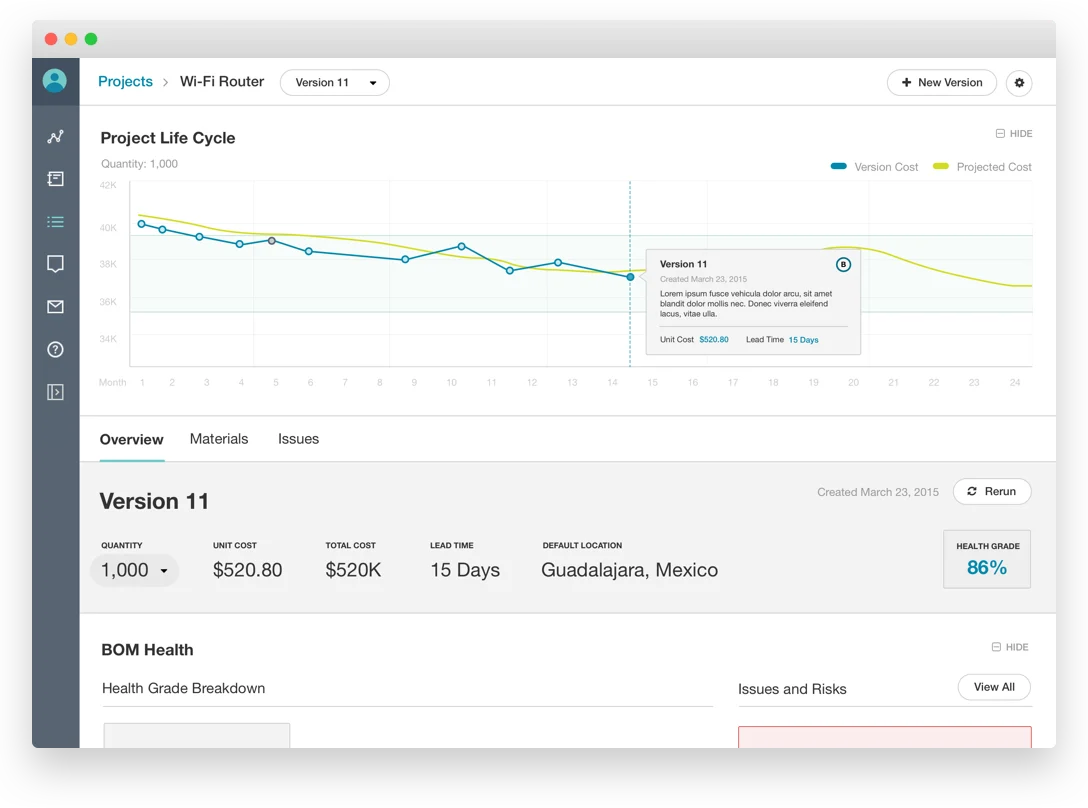
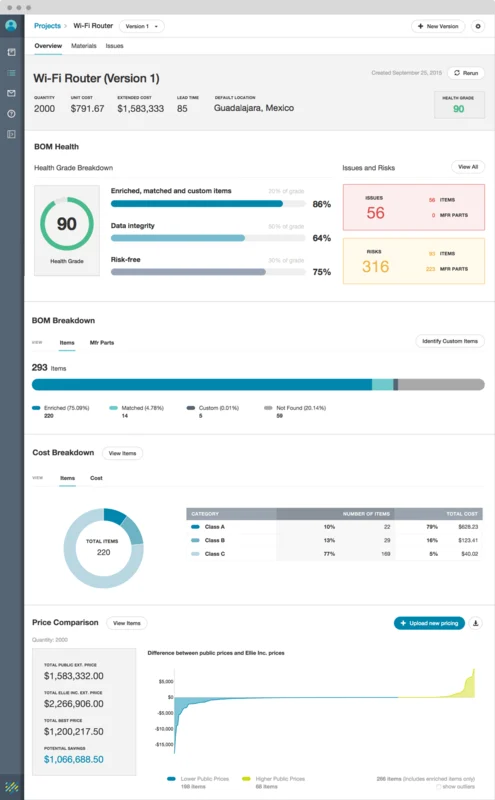
Paradata helps product teams understand the supply chain behind what they build, by enriching bills of materials and turning supply-chain data into insight. We worked with Paradata on this product, and the brief was clear:
Build a better way for enterprises to visualize big data for supply chain optimization, enriching users’ bill of materials and providing descriptive and prescriptive insights throughout a project’s lifecycle.
The challenge
A bill of materials looks tidy on paper. In practice, BOM data is incomplete and inconsistent across suppliers: part numbers differ, descriptions vary and key details are missing. Enterprises hold huge volumes of this data without a clear way to see what it is telling them.
A chart only helps if the picture is accurate. Supplier details and product versions need a traceable history, or a visualization becomes a confident view of the wrong thing. And because products change throughout their lifecycle, the insight has to keep up with every revision.
What the product set out to do
The work centred on three ideas from the brief:
- Make supply-chain data visible. Give enterprise teams a clear view of large, messy datasets.
- Enrich the bill of materials. Fill in the missing context on each user’s BOM, so it becomes a working tool instead of a static list.
- Explain and advise. Show teams what is happening across a project’s lifecycle, and what they could do about it.
Underneath all three is data quality. Knowing where each record came from, how it was cleaned up and which version of the product it belongs to is what lets a team act on an insight instead of second-guessing it.
How we'd build this today
How we would build it today with Cortex
This work predates Cortex. On a supply-chain data product today, the biggest gains would come from:
- Turning each supplier-to-BOM transformation into a typed contract with reconciliation tests, so a change in one supplier’s format cannot quietly corrupt a dashboard.
- Building a lineage map that links every normalized part and risk signal back to the raw supplier records behind it.
- Running automatic spot checks against known-good BOM assemblies, with a person reviewing every exception.
- Using AI to summarize unusual supply patterns for analysts, while part mappings change only with human sign-off.
The domain expert approves the data rules; Cortex makes it faster to build, test and trace them.
Frequently asked questions
What did CognitiveClouds work on with Paradata?
Bill-of-materials enrichment and supply-chain insight for product teams.
Why does data lineage matter so much here?
Supplier data is inconsistent. Teams can only act on an insight when they can see where the numbers came from and which product version they describe.
Was Cortex used on the original project?
No. Cortex came after the Paradata work; the list above shows how it would help today.
Building a data-heavy enterprise product?
Start by telling us about your messiest dataset. That is usually where the real product is hiding.