Case study
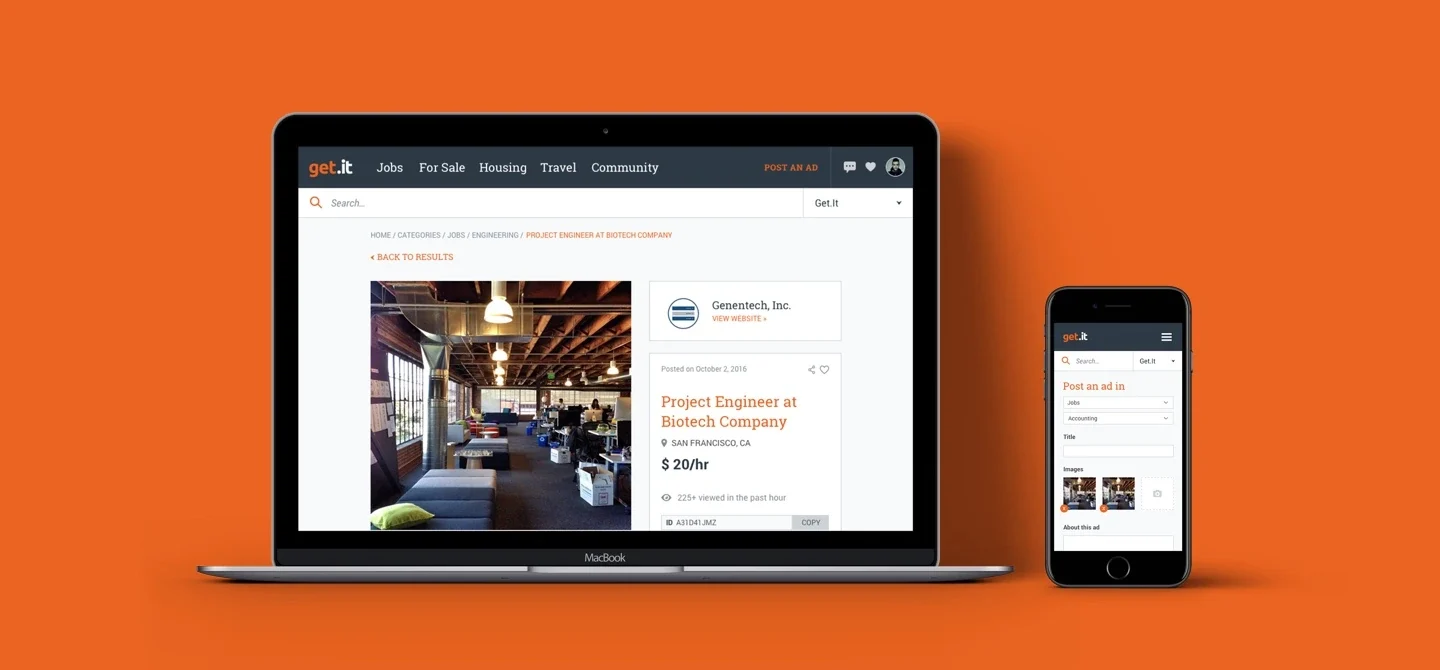
Get.It forges connections between people and organizations. It came to us to make those connections more intuitive, accessible and impactful, so that discovering an organization leads naturally to a meaningful interaction with it.
Get.It forges connections between people and organisations and looked to Cognitive to help them make these connections more intuitive, accessible, and impactful
The challenge
A connection platform succeeds or fails at one moment: when a person decides whether to reach out. To get there, they need to understand who they're connecting with, why the connection is relevant to them, and what happens next. If any of that is unclear, people hesitate and the connection never happens.
Get.It wanted every step of that path to feel obvious, and to work for everyone, including people who rely on accessible design.
How we approached it
We worked with Get.It on the user experience and product workflows behind its people-to-organization connections, from discovery through to contact.
Clear context first
People act when they understand. Each step toward a connection should explain who the organization is and why it matters to this person, before asking them to do anything.
Show only what's needed
Progressive disclosure keeps the path simple. People see the essentials first and can go deeper when they choose to.
People stay in control
Users decide when to connect and how they hear back. Consent and notification settings should be easy to find and easy to understand.
Accessible by default
An accessible connection is one that works for keyboard users, screen-reader users and anyone on a small screen. That is part of making connections more intuitive, not a separate checklist.
What we design and test for
The weak points of a connection product are well known, and we plan for them from the start:
- Misdirected contacts: a message or request reaching the wrong organization.
- Inaccessible interactions: controls that some users simply can't operate.
- Incomplete profiles: organizations or people missing the details others need to decide.
- Unclear consent: notification and contact settings that surprise people.
How we'd build this today
How we'd build this today with Cortex
Our Get.It work came before Cortex. Today we'd make every step of the connection flow testable.
- Define "connected" precisely. Turn goals like "people understand why this organization matters" into checks a test can pass or fail.
- Test every screen size and input method. Use Cortex Pods to generate keyboard, screen-reader and small-screen states for each step of the connection flow, and rerun them on every change.
- Map what each screen depends on. Before changing how people discover organizations, trace which profile and content data each screen relies on.
- Respect consent in tests. Every message and notification test checks that the person agreed to receive it.
Changes to how people and organizations are matched go through user testing first, and our designers review any change to consent or notification settings.
Frequently asked questions
What did we do for Get.It?
Get.It engaged us to make its connections between people and organizations more intuitive, accessible and impactful. We worked on the user experience and product workflows behind those connections.
Why does accessibility matter so much here?
A connection only happens if a person can complete it. Accessible design widens who can take part, which is the whole point of a connection platform.
Was Cortex used on the original project?
No. Cortex didn't exist yet; the list above is how we'd approach the work now.
Improving a connection or community product?
We'd start with the moment your users decide whether to reach out, and what stops them. Our design and engineering services.