Case study
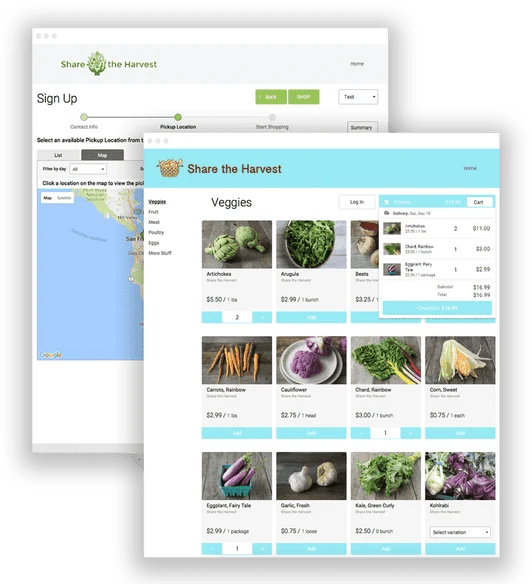
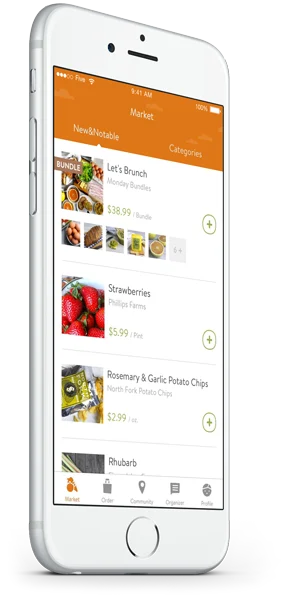
Farmigo set out to fix the food chain. As a farm-to-table startup, it connects farmers and food producers directly with consumers, who order fresh food and pick it up in a nearby community of their choice. We built Farmigo's food-hub software, the system that links local producers with the people who buy from them.
Farmigo is a company that is fixing the existing food chain. They’re a farm to table startup which means they connect farmers and food producers directly with consumers. Everyone can order fresh and delicious food and have it delivered to a nearby community of their choice.
The challenge
Local food commerce works nothing like a typical online store. There is no warehouse with endless stock. Products come from independent farms and producers whose supply changes week to week. Orders are collected at community drop-off points rather than shipped to a doorstep, and ordering often runs on fulfillment windows.
That model is what made Farmigo special, and it is also what made the software demanding. A shopper's basket, a producer's changing harvest and a pickup location all have to line up for an order to arrive as promised.
What we built
We delivered the food-hub software at the heart of Farmigo's model, connecting farmers directly with local consumers. Farmigo is part of our Agriculture & AgTech work.
The decisions that shape a food hub
Who owns inventory truth
When a farmer's supply changes, every open basket is affected. A food hub needs one clear answer to how much of each product is available, and it has to update fast enough that shoppers don't buy what isn't there.
When ordering closes
Fulfillment windows give producers time to harvest and pack. The system has to close orders on schedule and make the cutoff obvious to shoppers before they miss it.
What happens when something changes
Substitutions, short supply and changed pickup details need to reach customers and producers quickly and clearly. A good food hub turns those exceptions into simple messages rather than surprises at pickup.
Where food hubs get tested
The hardest scenarios for a food hub are the ones that happen every week in real life: limited items that oversell, producers who change their supply late, pickup points that get cancelled, and orders that can only be partly filled. These are the cases we plan and test for first.
How we'd build this today
How we'd build this today with Cortex
Farmigo's software came before Cortex. Today we'd start from the weekly order cycle that drives every food hub.
- Write the weekly cycle down. Map how a producer posts supply, how shoppers order, when the window closes and how goods reach each pickup point, with an example for every step.
- Test the reservation logic hard. Use Cortex Pods to generate tests where two shoppers chase the last item, or a farmer cuts supply after orders are in.
- Fill synthetic baskets. Run large batches of fake orders through partial availability, substitutions and refunds before real customers do.
- Trace one change everywhere. When a pickup rule changes, see every screen, order step and customer message it affects.
Every inventory change keeps a record of who made it and why, and any order rule drafted with AI ships only after tests with fixed, expected results pass.
Frequently asked questions
What is Farmigo?
A farm-to-table food hub that connects farmers and food producers directly with consumers, who collect their orders in a nearby community.
What did we build?
Farmigo's food-hub software, connecting farmers directly with local consumers.
Was Cortex used on the original project?
No. Farmigo's food hub was built before Cortex. The list above is how we'd build a food hub now.
Building local or marketplace commerce?
Walk us through one week of your fulfillment cycle and we'll show you where it is most likely to break. More agriculture and commerce work.