Case study
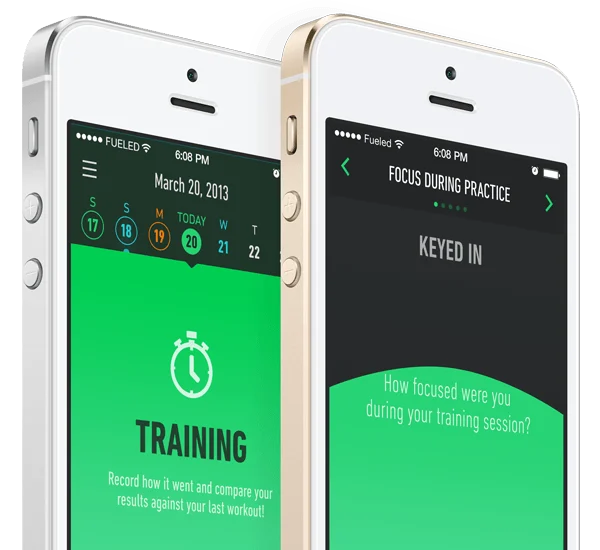
AthleteMinder is a mental strength and conditioning app. It lets users plan and track their mental skills, with graphics and data visualizations that make the training easy to follow. We worked with AthleteMinder on this personal mental-skills planning and visualization product.
AthleteMinder is the ultimate mental strength and conditioning tool, allowing users to plan and track their mental skills with ease. Gorgeous graphics and beautiful data visualizations make using this app all the more inviting.
The challenge
Physical training has well-worn tools: plans, logs, stopwatches and charts. Mental training has far fewer. Skills like focus, composure and visualization are real parts of performance, but they are hard to plan and harder to track, so they often get practiced inconsistently or not at all.
An app for mental conditioning has to make that invisible work concrete. It needs a simple way to plan what to practice, a quick way to log it, and a view of progress that keeps people coming back.
It also has to be careful about what it says. Self-tracking is motivating precisely because people can see their own patterns. But a chart of logged sessions shows effort and consistency; it is not proof of athletic improvement or a clinical result. A well-designed product helps people reflect on their training without overstating what the numbers mean.
The product
AthleteMinder brings three things together.
Planning
Users plan the mental skills they want to work on, giving mental training the same structure as a physical training schedule.
Tracking
Users track their mental skills over time, turning practice into a record they can look back on.
Visualization
Graphics and data visualizations make that record inviting to use. Good visual design matters here: if logging feels like a chore, people stop doing it, and the habit the app exists to build never forms.
What makes a product like this work
The engineering behind a self-tracking app is mostly about trust. People need to understand what the app knows, where each number came from and what they can do next. Edits, missed days and time zones all have to be handled gracefully, so the history a user sees is the history they actually recorded.
How we'd build this today
How we'd build it today
Cortex came after this project. Building a mental-training app today, we would:
- Label clearly what an athlete logged and what the app worked out from it.
- Test missed sessions, travel across time zones and edits to old entries.
- Have a sports psychology expert review any AI-written coaching tips before athletes see them.
- Design trend charts that show consistency and effort without hinting that one habit caused a result.
Cortex Pods would help write the tracking and charting code and its tests, while a coach-facing product owner decides what the app says to athletes.
Frequently asked questions
What is AthleteMinder?
A mental strength and conditioning app for planning and tracking mental skills, with data visualizations of progress.
What did CognitiveClouds work on?
We worked with AthleteMinder on its personal mental-skills planning and visualization product.
Was Cortex used on the original project?
No. The list above is how we'd approach a mental-training app with Cortex today.
Working on a tracking or wellbeing app? Browse our consumer work.